How Pregnancy Changes Your Body
Overview:
Aside from simply the changes in body image, there are many
other changes a woman's body undergoes during pregnancy. The extent of
these changes varies from person to person, and is dependent on things such as
gestational age, pre-pregnancy fitness levels, and body composition. Some
of the major physiological and anatomical changes the body undergoes are
reported below.
Cardiovascular Changes:
As pregnancy progresses and the size of the uterus increases,
the heart is displaced upward and slightly to the left within the chest
cavity. The wall of the heart thickens as the muscle works harder to
support the pregnancy (4).
The heart adapts to increased demands on it by the enlarging
uterus, and growing fetus by increasing Cardiac Output (amount of blood pumped
by the heart in one minute) rises 30-50% during pregnancy (1). Cardiac
output increases during pregnancy because there is a decrease in the resistance
to blood flow as more blood flows to the placenta. Gestational hormones
also cause blood vessels to relax, which both allow blood to flow through the
body easier and faster, so more blood can be pumped more often (5). Blood
volume also increases, rising 35% to 45% over the pre-pregnant state. To
offset the increased volume so that blood pressure isn't increased the
circulatory system adapts by increasing the capacity of the veins. Greater
vasodilation is another circulatory adaptation that occurs during pregnancy to
increase heat loss and reduce the tendency for hyperthermia (2).
There is a greater increase in blood plasma than red cell
mass, therefore anemia (insufficient number of red blood cells) often occurs
during pregnancy (1). Endurance athletes may notice an improvement in
their performance early in pregnancy as their blood volume and red blood cell
mass will have increased, before an increase in body weight and uterine size
begins to occur. This could cause changes similar to a blood-doping
effect, where there is an increase in the oxygen-carrying capacity of the blood
in the athlete (1).
Respiratory Changes:
As
the uterus enlarges, rising higher and higher in the abdomen, it prevents the
diaphragm from being drawn down completely during respiration. The
diaphragm is a dome-shaped sheath of muscle that separates the thoracic and
abdominal cavities. This can make deep breathing uncomfortable and
difficult (4). Respiration rate is found to increase during
pregnancy, which means the body is having to work harder to provide enough
oxygen to the developing fetus (3). The aerobic capacity (individuals
ability to perform work) depends on oxygen consumption and utilization,
otherwise known as VO2 max (4). Cardiovascular training has been
claimed to improve VO2 max by up to 33%; however, studies haven't
been able to prove that this increase isn't due to the increased oxygen carrying
capacity of Hemoglobin that occurs as a result of the rise in blood volume (4).
Hormonal Changes:
Relaxin is a hormone produced during pregnancy
that causes joint laxity. It allows softening of the supporting ligaments
in the body's joints, and the connective tissues in the
pelvic girdle to relax and soften. This results in increased flexibility
which is needed to widen the pelvis so that the baby can pass through the birth
canal (4). This can make pregnant women more prone to muscle and soft
tissue injuries. The increased looseness of the sacral bone at the back of
the pelvis can lead to considerable discomfort in the lower back (4).
Weight Gain and Weight Distribution:
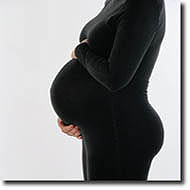 |
Weight gain increases average 1 to 3 kg in the first
trimester, 6 to 8 kg in the second trimester, 3.5 to 4 kg in the third
trimester, and tends to plateau near term. The total weight gain during
pregnancy averages about 12 kg, and the distribution of this weight is shown in
the table below (5).
|
Distribution
of Average Weight Gain During Pregnancy
| Contributing Factor |
Weight Gain |
| Infant at Birth |
3.5 kilograms |
| Placenta |
0.7 kilograms |
| Amniotic Fluid |
0.8 kilograms |
| Maternal Blood Volume and Extracellular Fluid |
2.0 kilograms |
| Maternal Fat Stores |
2.5 kilograms |
| Uterus |
1.0 kilograms |
| Breasts |
1.5 kilograms |
| Total |
12.0 kilograms |
Posture, Center of Gravity, and Balance:
As the baby grows the abdominal organs are pushed up and the
center of gravity shifts forward, causing shifts in the mothers center of
gravity. The body compensates for this forward shift in the center of
gravity by increasing the amount of curvature in their spine (Lordosis) and a
forward tilt of the pelvis (3). Increased breast mass is also compensated
for by adjusting the posture of the head, and the amount of curvature in the
spine. The instability of the pelvis (a result of Relaxin
secretion), and the unstable posture created by the increase in body weight,
result in a wide-based form of walking called "waddling gait"
(3). These changes in posture make it difficult for some women to
continue participating in competitive sport, as well as increase the risk of
falling and losing balance.
Postnatal Bodily Changes:
- Immediate 5 to 7 lb. weight loss after childbirth- from
loss of baby, placenta, and body fluids
- 3 to 12 months to lost excess body fat
- blood volume returns rapidly to preconception levels
- Changes in cardiovascular system, and heart return to
normal over a longer period of time (5)
Points of Interest
The
overall prevalence of back pain during the 9-month period is thought to be
approximately 50%. Pain can begin before the 12th week and continue up to
6 months postpartum (3).
Various studies found that the risk factors
that contributed to back pain during pregnancy were pre-pregnancy back pain and
multiparity (giving birth to twins, triplets, etc.), whereas age, height,
weight, race, fetal weight, and socioeconomic status do not seem to correlate
(3).
At conception the body begins to release
increased amounts of hormones that soften ligaments and fibrous tissues and
loosen the joints. This allows the body to make room for the expanding
uterus, but it also predisposes the body to more stress and strain than
before conception.
The back and abdominal muscles support the
spine and keep it in proper alignment. In response to the growing fetus,
the abdominal muscles often separate because of the amount of stretching they
need to undergo. This condition is termed Diastasis Recti. This
condition causes the back muscles to compensate for the abdominal muscles in holding the
spine erect- causes tight, stressed muscles. Even if Diastasis recti does
not occur, the abdominal muscles lose their tone and become less effective at
helping to maintain a neutral posture.
Initial treatment for pregnant patients
with back pain consists of such things as heat and ice. Massage therapy
may also provide short-term pain relief. Proper neutral posture can be
taught by a physician as well. Pregnant Women should be taught to perform
all activities in the neutral spine posture; observing the patient in a physical
therapy office simulating her usual daily activities can ensure that she knows
how to maintain a neutral spine.
Exercise programs are often used to improve
the strength and condition of supporting structures. The exercise helps
the patient maintain a neutral spine posture, promote biomechanic efficiency,
and minimize stress on the back.
NOTE - Physically fit women who get 45 minutes or more of
physical activity a week are less likely to develop back pain during pregnancy
(3).
References:
1.
Araujo, D. (1997) Expecting questions about exercise and
pregnancy. The Physician and Sportsmedicine, 25 (4).
2.
Artal, R. (1999) Exercise During Pregnancy: Safe and Beneficial for
Most. The Physician and
Sportsmedicine 27(8).
3. Colliton,
J. (1996). Back Pain and Pregnancy: Active Management Strategies. The
Physician and Sportsmedicine, 24 (7).
4.
Freyder, S.
Connelly. (1989). Exercising While Pregnant. JOSPT, March, 358-364.
5.
Holstein, B.
(1989, June). Exercise During Pregnancy. Idea Today, pp.
1-5
6.
Wolfe, Larry A. (1993). Pregnancy. In J. Skinner, Exercise
Testing and Exercise Prescription for Special
Cases
(pp. 363- 385). Philadelphia: Lea & Febiger.
(Return
Home)
(Nutrition)
(Exercise
on your Body) (Effects
of Pregnancy) (Exercise
Guidelines)
(Precautions
& Contraindication) (Benefits
of Exercise) (Exercise
Programs) (Perinatal
Dangers)
(Hints
for Around the House) (Tips
for Fitness Instructors)
